Why a furnace usually quits on the coldest night of the year
The failure is rarely instant. Here is what the furnace is telling you two weeks before it quits, and what to check yourself before you call.
September 15, 2026 · 4 min read
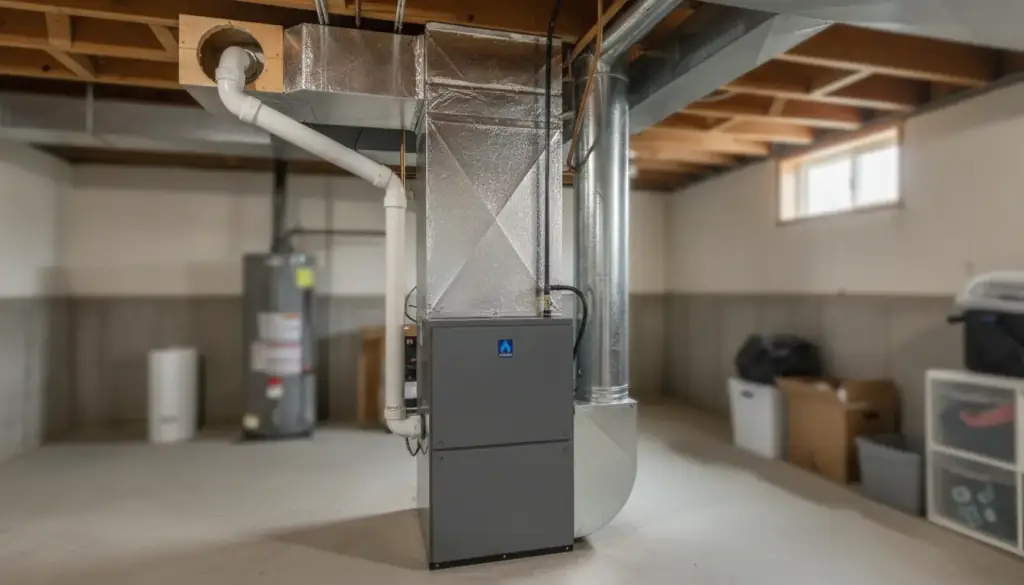
A furnace rarely fails out of nowhere. It usually gives itself away for a week or two first, and most homeowners only notice the payoff at the worst possible moment: ten below, two in the morning, a house going cold. Here is what is actually happening inside the cabinet before that happens, and what you can check yourself before you pick up the phone.
The warning signs are already there
By the time a furnace quits outright, it has usually been telling on itself for a week or two. A burner that used to light on the first try now clicks two or three times first. The blower runs a beat longer than it used to before heat shows up at the register. The unit shuts off and restarts more often than it did last month. None of that feels urgent enough to call about on its own. Together, in the same two weeks, it adds up to a furnace working harder to do the same job, and a furnace that works harder is a furnace that is closer to a safety shutoff.
Short cycling means the furnace is protecting itself
Short cycling is when the furnace fires, runs for a few minutes, and shuts off again long before the house is up to temperature, then repeats. It is almost never the furnace being weak. It is almost always the furnace's own safety switches doing their job: a high limit switch trips because airflow is restricted, and a filter that should have been changed a month ago is the most common cause we see in a Wisconsin winter, when furnaces run flat out from November through March. Or a flame sensor is not proving ignition reliably enough to let the burner stay lit. Either way, the furnace is telling you something is wrong upstream of the burner itself, not that the burner is dying.
A fouling flame sensor looks like a bigger problem than it is
The flame sensor is a thin metal rod that sits in the burner flame and proves to the control board that ignition actually happened. Over a heating season it picks up a light coating of oxidation, and once that coating gets thick enough the sensor stops reading the flame reliably. The furnace lights, the sensor fails to confirm it, the gas valve shuts back down, and the furnace tries again. To a homeowner that looks and sounds like the furnace is failing outright. To a technician it is usually a five-minute fix: pull the sensor, clean it, reseat it. It is one of the few components inside the cabinet that is genuinely a light-maintenance item rather than a repair, which is also why it is worth asking about on the phone before a truck is dispatched.
Marginal draft turns a small problem into a shutoff
Furnaces need a clean path for combustion air in and exhaust out. A liner that has shifted, a vent run with too many bends, or a chimney partially blocked by a bird's nest or ice buildup all reduce draft without stopping it completely, so the furnace runs fine on a mild night and shuts itself off on the coldest one, exactly when it is working hardest and the draft margin is thinnest. That is not a coincidence. It is the mechanism behind why furnaces disproportionately fail on the coldest night of the year: everything that was marginally adequate in October stops being adequate once the furnace is running nearly continuously in January.
What to check yourself
- Change the filter. A filter that has not been changed since fall is the single most common cause of short cycling we see.
- Check the thermostat batteries and the breaker or switch at the furnace before assuming the unit itself has failed.
- Listen for a repeated click at ignition. That is a strong sign of a flame sensor issue, not a bigger one.
- Look outside at the exhaust vent for snow or ice blocking it after a storm. A blocked vent triggers a safety shutoff, and it is one you can often clear yourself.
What to stop touching
Past that point, stop. Do not open the burner compartment, do not attempt to relight a standing pilot on a furnace that has one, and do not reset the switch at the furnace more than once if it trips again immediately. A furnace that will not stay running after one reset has a reason, and running it again without finding that reason is how a marginal problem becomes an expensive one, or a dangerous one. Gas furnaces are not a place to guess.
When to call
We run 24-hour emergency service specifically because furnaces do this on the coldest night, not the most convenient one. Office hours on Sunday Drive are Monday to Thursday 8:00 AM to 4:30 PM and Friday 8:00 AM to 4:00 PM for estimates and scheduling, but the emergency line runs around the clock all winter. Call (715) 834-5409, day or night, and you get someone from the shop, not an answering service. Estimates are free, and any repair we make carries a one-year workmanship warranty.
Certified Inc, (715) 834-5409
Call (715) 834-5409More articles
Hard water, orange stains and blue-green joints: reading what your well is doing to the house
Three symptoms in three different rooms are usually the same well telling you three different things.
The frozen sewer lateral, and what actually thaws one
It does not look like a burst pipe. It looks like every drain in the house backing up on the coldest week of the year.