Mini-splits in a house that never had ductwork
Which system is right depends on the room, not just the house.
September 15, 2026 · 3 min read
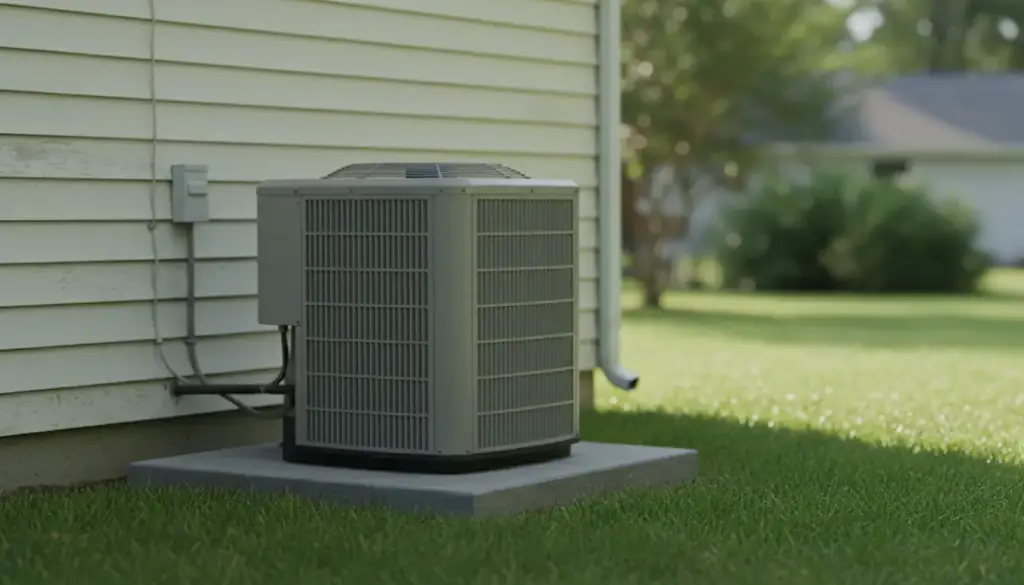
A lot of older houses in the Chippewa Valley were built with a hot water or steam heating system and no ductwork at all, which means no easy path for central air conditioning either. Mini-splits and self-contained units solve that differently, and which one is right depends on the room, not just the house.
Why ductwork is the real obstacle, not the cooling itself
Central air needs a duct system to move cooled air around the house, and retrofitting ductwork into a house that was never built with it means finding a path for a duct run through finished walls, ceilings or floor joists that were never designed to carry one. In a lot of older farmhouses and bungalows around Altoona and Eau Claire, that path simply does not exist without tearing into finished space, which is a much bigger, more disruptive project than the cooling problem it is solving.
Where a mini-split earns its keep
A mini-split runs refrigerant line, not ductwork, between an outdoor unit and one or more indoor units mounted directly in the rooms that need conditioning, so it goes into an older house without the demolition a full duct retrofit requires. It is a strong fit for a room addition that was never tied into the original heating system, a finished attic or bonus room that runs hot in summer and cold in winter because it sits furthest from the furnace, or a garage conversion that needs its own independent heating and cooling entirely. Because each indoor unit is controlled on its own, a mini-split also lets you condition only the rooms actually in use, which matters in a house where some rooms see daily use and others do not.
Where a self-contained unit is the smaller, honest answer
Not every problem needs a mini-split installed. A self-contained unit is a portable, standalone system that cools one room without any outdoor unit or line set at all, and it is the right answer for a single room with an occasional cooling need, a rented space where a permanent installation is not an option, or a budget that does not call for solving the whole house at once. We install both, and we will tell you honestly when the smaller unit is the right answer rather than putting in a mini-split system the house does not need.
What installation actually involves
A mini-split needs a spot for the outdoor unit, a way to run the line set from that outdoor unit to each indoor head, and a wall or ceiling location for the indoor unit itself that gets even airflow across the room. In an older house that usually means routing the line set through an exterior wall once, near where the indoor unit will hang, rather than opening up finished space the way a duct run would require. A single outdoor unit can often serve more than one indoor head, so a two-room addition or a finished attic with two distinct spaces does not necessarily need two separate outdoor units. How many zones a house needs, and where the outdoor unit can reasonably sit without being in the way of snow removal or too close to a bedroom window, are exactly the kind of details that change from house to house and are worth walking through in person rather than guessing at over the phone.
What a mini-split will and will not do in January
A mini-split heats as well as it cools, and in the rooms it serves it can genuinely reduce how hard the main furnace has to work through the shoulder seasons and into real winter. What it will not do is replace the primary heating system in a Chippewa Valley January on its own. In an older house with no ductwork, the honest way to think about a mini-split is as targeted, room-by-room conditioning that solves a specific problem well, not as a whole-house replacement for the furnace already there. Anyone who tells you otherwise without seeing the house first is selling you the story instead of the system.
Talk it through before you decide
Every house like this is a little different: which rooms actually need it, where an outdoor unit can go, whether one indoor head covers the space or you need two. We look at the actual rooms before recommending a mini-split, a self-contained unit, or a duct retrofit, and estimates are free. Call (715) 834-5409.
Certified Inc, (715) 834-5409
Call (715) 834-5409More articles
Why a furnace usually quits on the coldest night of the year
The failure is rarely instant. Here is what the furnace is telling you two weeks before it quits, and what to check yourself before you call.
Hard water, orange stains and blue-green joints: reading what your well is doing to the house
Three symptoms in three different rooms are usually the same well telling you three different things.